Accelerated 3-Year Bachelor Degrees: Curriculum Breakdown
Advertisements

Latest developments on Accelerated 3-Year Bachelor Degrees: Curriculum Breakdown of the 12 Pilot Programs Approved for 2026, with key facts, verified sources and what readers need to monitor next in Estados Unidos, presented clearly in Inglês (Estados Unidos) (en-US).
Accelerated 3-Year Bachelor Degrees: Curriculum Breakdown of the 12 Pilot Programs Approved for 2026 is shaping today’s agenda with new details released by officials and industry sources. This update prioritizes what changed, why it matters and what to watch next, in a straightforward news format.
Understanding the Shift to Accelerated Bachelor Degrees
The landscape of higher education in the United States is undergoing a significant transformation with the introduction of accelerated bachelor degrees curriculum. These innovative programs aim to provide students with a faster pathway to graduation, addressing concerns about rising tuition costs and prolonged time to degree completion. The recent approval of 12 pilot programs for 2026 marks a pivotal moment, signaling a broader acceptance of non-traditional academic structures.
These pilot programs, meticulously designed and vetted, are not merely condensed versions of existing degrees. Instead, they represent a reimagining of curriculum delivery, credit allocation, and experiential learning. The focus remains on maintaining academic rigor while optimizing the student journey, ensuring graduates are well-prepared for their chosen careers.
As these programs move from concept to implementation, understanding their foundational principles and the specifics of their curriculum breakdown becomes paramount. Stakeholders across the educational spectrum, from prospective students to institutional leaders, are keen to grasp the implications of this shift.
The Genesis of 3-Year Degree Programs
The concept of 3-year bachelor degrees is not entirely new, with various models experimented with internationally and in niche programs domestically. However, the current initiative for accelerated bachelor degrees curriculum represents a concerted, government-backed effort to standardize and expand this option across a broader range of disciplines. This move is largely driven by economic pressures and a growing demand for a more efficient higher education system.
Discussions surrounding the efficacy and potential challenges of accelerated programs have been ongoing for years. Advocates highlight the benefits of reduced student debt and quicker entry into the workforce, while critics express concerns about potential academic dilution or increased student stress. The 12 pilot programs aim to address these concerns through carefully structured curricula and robust support systems.
The approval process for these pilot programs was rigorous, involving extensive review by educational bodies and accreditation agencies. This ensures that the chosen institutions and their proposed curricula meet high academic standards, setting a precedent for future expansions of the accelerated bachelor degrees curriculum model.
Key Drivers for Acceleration
- Cost Reduction: Decreasing overall tuition and living expenses for students.
- Workforce Readiness: Expediting graduates' entry into the job market.
- Student Demand: Meeting the growing desire for more efficient academic paths.
- Global Competitiveness: Aligning with international norms for degree duration.
Curriculum Design Principles for Pilot Programs
The core of the accelerated bachelor degrees curriculum lies in its innovative design principles, which prioritize efficiency without sacrificing depth. Each of the 12 pilot programs has adopted a modular approach, integrating core competencies and specialized knowledge more effectively than traditional four-year models. This often involves year-round study, intensive course loads, and a reduction in elective credits, focusing on direct relevance to the degree's objectives.
Experiential learning, internships, and project-based assignments are heavily emphasized to ensure practical skill development. The goal is to provide students with a comprehensive education that is both academically sound and professionally applicable. Faculty development and pedagogical innovations are also central to delivering these compressed curricula effectively.
Furthermore, institutions are leveraging technology to enhance learning, utilizing online modules, blended learning formats, and digital resources to support the intensive pace. This strategic integration of educational technology is vital for the success of the accelerated bachelor degrees curriculum, providing flexibility and access to materials outside of traditional classroom settings.
Common Curriculum Elements
- Integrated Core: Foundational courses are streamlined and interconnected.
- Intensive Modules: Shorter, more focused learning blocks throughout the year.
- Early Specialization: Students choose majors earlier to optimize course selection.\
- Practical Applications: Strong emphasis on internships, co-ops, and capstone projects.
Breakdown of Approved Pilot Programs for 2026
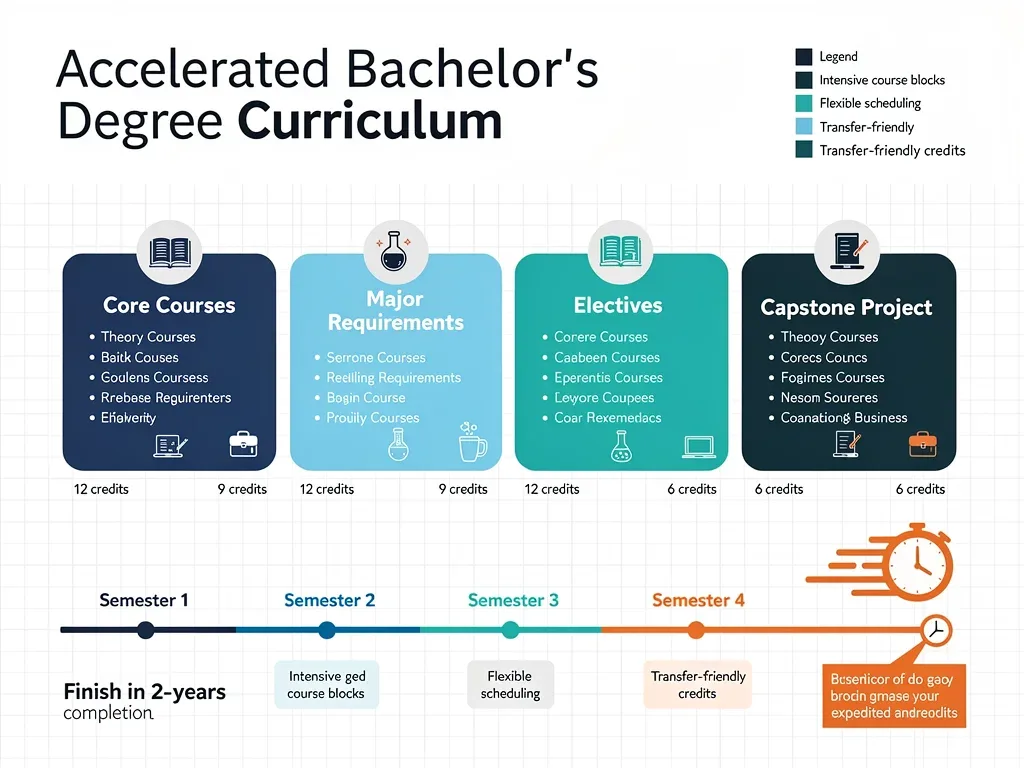
The 12 pilot programs approved for 2026 span a diverse range of disciplines, reflecting a broad application of the accelerated bachelor degrees curriculum model. These include programs in STEM fields, business, humanities, and health sciences, indicating the adaptability of the accelerated format to various academic requirements. Each program has a distinct approach to compressing its curriculum while maintaining educational quality.
For instance, a computer science program might integrate advanced topics earlier and require a year-long capstone project in the third year. A business administration program could blend coursework with mandatory summer internships, allowing students to gain professional experience concurrently with their studies. These variations highlight the tailored nature of each accelerated program.
Detailed breakdowns, currently being finalized by the respective institutions, will soon provide prospective students with precise course sequences, credit allocations, and graduation requirements. This transparency is crucial for students to make informed decisions about pursuing an accelerated bachelor degrees curriculum that aligns with their academic and career goals.
Challenges and Opportunities in Implementation
Implementing accelerated bachelor degrees curriculum programs presents both significant challenges and unparalleled opportunities for higher education. Institutions must navigate issues such as faculty workload, student support services, and potential burnout for both students and educators. Ensuring adequate resources and support mechanisms will be critical for the long-term success of these programs.
One primary challenge involves adapting existing institutional infrastructure, including registration systems, financial aid policies, and academic advising, to accommodate the faster pace. Universities are investing in new advising models tailored to accelerated students, providing guidance on time management, stress reduction, and career planning from the outset. This holistic support is vital for student retention and success.
Conversely, the opportunities are immense. These programs can attract a new demographic of students seeking efficient, career-focused education, potentially increasing enrollment and diversifying student bodies. They also offer a chance for institutions to innovate their pedagogical approaches and demonstrate leadership in educational reform, positioning them at the forefront of modern higher education practices and the evolving accelerated bachelor degrees curriculum trend.
Addressing Potential Hurdles
- Faculty Training: Equipping educators with skills for intensive delivery.
- Student Welfare: Providing robust mental health and academic support.\
- Accreditation Compliance: Ensuring programs meet all regulatory standards.
- Resource Allocation: Adapting financial and physical resources to new demands.
Student Impact and Outcomes
The impact of accelerated bachelor degrees curriculum on students is a central point of discussion. For many, the prospect of completing a degree in three years offers a compelling advantage, reducing the financial burden and allowing for earlier entry into the professional world or postgraduate studies. This can be particularly appealing for students eager to kickstart their careers or those with clear academic trajectories.
However, the accelerated pace demands a high level of commitment, self-discipline, and academic aptitude. Students enrolling in these programs must be prepared for intensive coursework, potentially fewer breaks, and a continuous learning environment. The pilot programs are designed to attract highly motivated individuals who can thrive in such demanding settings, and admissions processes will likely reflect this.
Early indicators suggest that graduates of accelerated programs are highly competitive in the job market, often possessing a strong work ethic and a focused skill set. The emphasis on practical application within the accelerated bachelor degrees curriculum means these students are often better prepared for immediate professional contributions, making them attractive to employers seeking efficient and skilled talent.

Policy and Regulatory Frameworks
The approval of the 12 pilot accelerated bachelor degrees curriculum programs for 2026 underscores a supportive shift in policy and regulatory frameworks at both federal and state levels. These frameworks are crucial for legitimizing and scaling such initiatives, ensuring they operate within established educational guidelines while fostering innovation. The Department of Education and various state higher education boards have been instrumental in developing the necessary oversight.
Key policy considerations include financial aid eligibility for three-year programs, which traditionally has been structured around four-year models. Adjustments are being made to ensure that students in accelerated programs receive equitable access to federal grants, loans, and state scholarships. This financial support is vital for making these programs accessible to a broader student population.
Accreditation bodies are also adapting their review processes to evaluate the quality and rigor of accelerated bachelor degrees curriculum. This involves assessing how institutions maintain academic standards, provide student support, and ensure comparable learning outcomes within a compressed timeframe. The success of the pilot programs will heavily influence future policy decisions and the expansion of these models.
Regulatory Adaptations
- Financial Aid Recalibration: Adjusting aid packages for shorter degree durations.
- Accreditation Standards: Developing specific criteria for accelerated programs.\
- State-Level Approvals: Harmonizing state regulations with federal initiatives.
- Data Reporting: Establishing metrics to track program effectiveness and student success.
Future Outlook for Accelerated Degrees
The future of accelerated bachelor degrees curriculum in the United States appears promising, with the 12 pilot programs serving as crucial test cases. If these programs demonstrate successful outcomes in terms of student achievement, graduate employment, and institutional efficiency, it is highly probable that more such programs will be approved and implemented across the nation. This could fundamentally reshape the standard duration of a bachelor's degree.
Further expansion will likely involve a more diverse array of institutions, including public universities, private colleges, and potentially even community colleges offering 2+1 models. The long-term vision is to provide students with greater flexibility and choice in their educational pathways, aligning higher education more closely with individual needs and evolving economic demands. This broader adoption of the accelerated bachelor degrees curriculum could become a new norm.
Continuous evaluation and adaptation will be key to the sustained success of accelerated degrees. Educational leaders and policymakers will closely monitor the pilot programs' performance, collecting data on student outcomes, faculty experiences, and economic impacts. This ongoing assessment will inform future adjustments and ensure that the accelerated model continues to deliver high-quality, relevant education for generations to come, solidifying the role of the accelerated bachelor degrees curriculum in American higher education.
| Key Aspect | Brief Description |
|---|---|
| Program Approval | 12 pilot Accelerated 3-Year Bachelor Degrees approved for 2026. |
| Curriculum Focus | Modular design, intensive study, and practical application. |
| Student Benefits | Reduced costs, faster workforce entry, and focused education. |
| Future Implications | Potential for broader adoption and reshaping higher education norms. |
Frequently Asked Questions About Accelerated Degrees
What are Accelerated 3-Year Bachelor Degrees?▼Accelerated 3-Year Bachelor Degrees are innovative programs designed to allow students to complete their undergraduate studies in a compressed timeframe, typically three years instead of four. This is achieved through intensive coursework, year-round study, and streamlined curricula, focusing on core competencies and practical skills for faster career entry.
How do these programs differ from traditional bachelor's degrees?▼The primary difference lies in the duration and intensity. While traditional degrees often involve four academic years with summer breaks, accelerated programs condense the curriculum into three years, often requiring heavier course loads per semester and continuous enrollment. They emphasize direct application and career readiness.
What types of programs are included in the 12 pilot programs?▼The 12 pilot programs approved for 2026 span a diverse array of fields, including STEM, business, humanities, and health sciences. This variety demonstrates the adaptability of the accelerated model across different academic disciplines, catering to various student interests and professional pathways.
What are the main benefits for students pursuing an accelerated degree?▼Students can benefit from reduced tuition costs and living expenses due to the shorter program duration. They also gain earlier entry into the workforce or graduate studies, potentially accelerating their career progression and minimizing student loan debt, which are significant advantages in today's economic climate.
What challenges might students face in these accelerated programs?▼The intensive nature of accelerated programs requires strong time management skills, self-discipline, and resilience. Students might experience higher academic pressure and fewer breaks compared to traditional programs. Institutions are implementing robust support services to help students navigate these demands effectively.
Looking Ahead
The introduction of accelerated bachelor degrees curriculum through the 12 pilot programs for 2026 represents a critical evolution in higher education. This initiative is set to redefine conventional academic timelines, offering a more agile and cost-effective route to a bachelor's degree. Stakeholders should closely monitor the outcomes of these pilot programs, as their success will undoubtedly pave the way for wider adoption and further innovation in educational delivery across the United States. This shift signifies a proactive response to the changing needs of students and the economy.