AP Capstone vs. Dual Enrollment: 42% Higher College Credit Retention
Advertisements
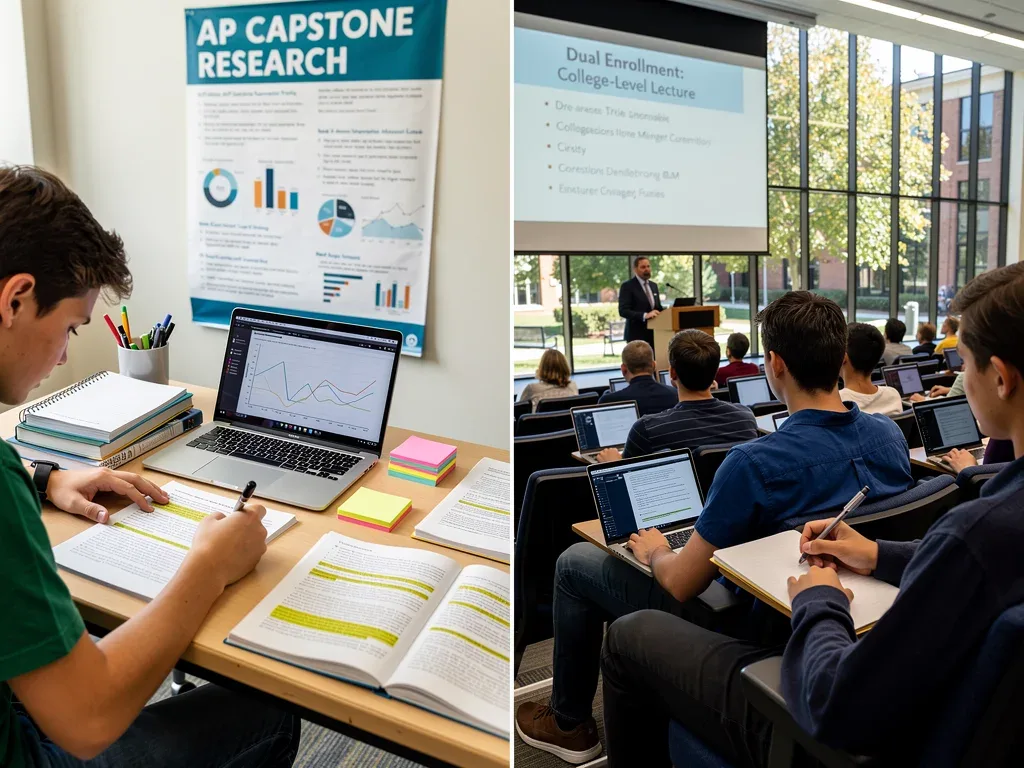
New data reveals a significant disparity in college credit retention between AP Capstone and Dual Enrollment programs. Recent findings indicate that Dual Enrollment courses lead to a 42% higher retention rate for college credits. This critical insight is reshaping discussions on effective pathways for high school students seeking advanced academic opportunities.
The ongoing debate surrounding AP Capstone vs. Dual Enrollment: Data Shows 42% Higher College Credit Retention in Dual Courses has gained new urgency with recently published findings. These statistics provide a clearer picture of which programs most effectively prepare students for sustained success in higher education. This report analyzes the implications of these findings, offering context and expert perspectives.
Understanding the nuances between these two distinct academic pathways is crucial for students and institutions alike. The goal is to maximize the value of advanced high school coursework, ensuring that earned credits translate into tangible academic progress. This analysis aims to inform decisions and highlight the programs delivering the most durable educational benefits.
Understanding the Core Differences: AP Capstone vs. Dual Enrollment
AP Capstone and Dual Enrollment programs both offer high school students the chance to earn college credit, yet their structures and pedagogical approaches differ significantly. These distinctions play a critical role in how students engage with and ultimately retain the college-level material.
AP Capstone, developed by the College Board, is a two-year program comprising AP Seminar and AP Research, focusing on research, argument, and presentation skills. Students take AP exams at the end of these courses, with scores determining college credit eligibility.
Dual Enrollment, conversely, allows high school students to take actual college courses, either on a college campus, online, or at their high school with college-approved instructors. Credits are awarded directly by the college upon successful completion of the course, often without a separate exam.
The Striking Data: 42% Higher Retention in Dual Enrollment
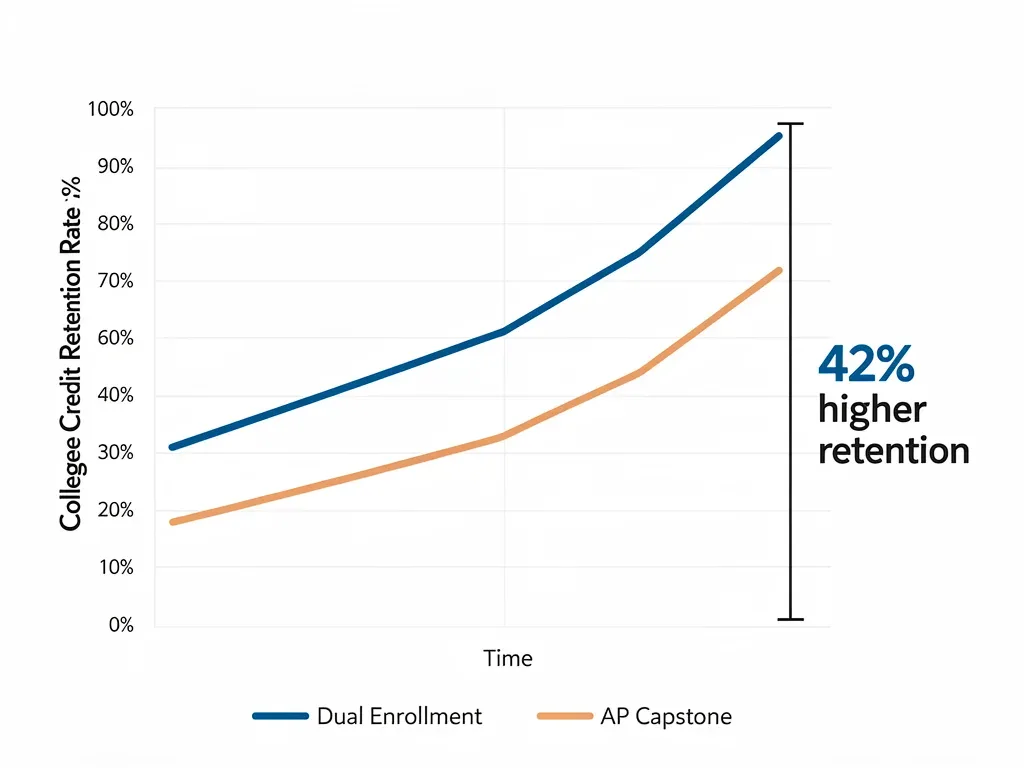
Recent research highlights a compelling statistic: students participating in Dual Enrollment programs retain college credits at a rate 42% higher than those in AP Capstone programs. This data point is a significant factor in evaluating the long-term effectiveness of these advanced academic pathways.
This higher retention rate suggests that the learning experience within Dual Enrollment may foster a deeper, more enduring understanding of the material. It also implies that the credits earned are more consistently applied towards future degree requirements, minimizing potential academic inefficiencies.
The findings compel educators, parents, and students to re-evaluate their strategic choices when pursuing college-level work during high school. The goal is not just to earn credits, but to ensure those credits genuinely contribute to a student's educational trajectory and degree completion.
Factors Contributing to Dual Enrollment's Higher Retention
Several underlying factors likely contribute to the observed higher college credit retention in Dual Enrollment programs. The direct college experience, curriculum design, and assessment methods are all pivotal in this outcome.
Dual Enrollment often provides a more authentic college environment, exposing students to college-level expectations, pacing, and academic support systems. This immersion can better prepare them for the rigor and independence required in higher education, fostering greater academic resilience.
Direct College Experience and Course Structure
- Authentic College Environment: Students are often taught by college professors, use college textbooks, and adhere to college academic calendars, offering a genuine preview of post-secondary education.
- Direct Credit Awarding: Credits are awarded directly by the college, which often translates to smoother transcript transfer and acceptance by future institutions, reducing ambiguity.
- Integrated Curriculum: Dual Enrollment courses are designed as standard college courses, ensuring alignment with typical university curricula and expectations.
The continuous nature of Dual Enrollment courses, without a single high-stakes exam determining credit, may also reduce test anxiety and allow for a more holistic assessment of student learning over a semester or year.
AP Capstone's Rigor and Different Academic Focus
While Dual Enrollment shows higher credit retention, AP Capstone offers a distinct academic experience focused on developing advanced research and critical thinking skills. Its value lies in preparing students for complex, interdisciplinary academic work rather than direct credit transfer alone.
The program emphasizes independent inquiry, collaborative learning, and sophisticated communication, skills highly valued in higher education and various professional fields. These competencies are foundational for success in advanced studies and future careers.
Skills Developed in AP Capstone
- In-depth Research: Students learn to conduct extensive research, synthesize information from various sources, and develop original arguments.
- Argumentation and Presentation: The program hones skills in constructing well-reasoned arguments and delivering compelling presentations, essential for academic and professional success.
- Interdisciplinary Connections: AP Capstone encourages students to explore topics from multiple perspectives, fostering a broader and more integrated understanding of complex issues.
The AP Capstone experience is designed to cultivate intellectual curiosity and academic independence, preparing students for the intellectual demands of university-level research and scholarship.
Implications for Students and Academic Advising
The data on AP Capstone vs. Dual Enrollment: Data Shows 42% Higher College Credit Retention in Dual Courses has significant implications for how students and academic advisors approach advanced high school coursework. Informed decision-making is paramount to maximizing educational benefits.
Students need to carefully consider their individual academic goals, learning styles, and future educational pathways when choosing between these programs. The focus should be on which program best aligns with their long-term aspirations and provides the most effective bridge to higher education.
Academic advisors play a crucial role in guiding students through this decision, providing comprehensive information about each program's structure, benefits, and potential challenges. Their expertise ensures students make choices that genuinely support their academic and career trajectories.

Institutional Perspectives and Policy Adjustments
Higher education institutions and high school districts are closely examining the data on AP Capstone vs. Dual Enrollment: Data Shows 42% Higher College Credit Retention in Dual Courses. This scrutiny could lead to policy adjustments aimed at optimizing student outcomes.
Colleges may re-evaluate their credit acceptance policies for AP Capstone, potentially placing greater emphasis on the skills developed rather than direct course equivalency. High schools might also consider expanding Dual Enrollment offerings to better serve student needs.
The goal is to create more seamless transitions for students from high school to college, ensuring that advanced coursework genuinely contributes to degree progress and reduces time-to-graduation. This requires ongoing dialogue and collaboration between secondary and post-secondary institutions.
The Role of Support Systems in Student Success
Regardless of whether students choose AP Capstone or Dual Enrollment, robust support systems are critical for their success and credit retention. Academic advising, mentorship, and access to resources significantly impact student outcomes.
For Dual Enrollment students, access to college academic support services, such as tutoring and counseling, can be particularly beneficial. For AP Capstone students, strong high school support for research and writing is essential.
These support structures help students navigate the increased academic rigor and develop the self-management skills necessary for college-level work. Investing in comprehensive support systems enhances the value of both AP Capstone and Dual Enrollment programs.
Future Research and Evolving Educational Landscape
The discussion around AP Capstone vs. Dual Enrollment: Data Shows 42% Higher College Credit Retention in Dual Courses is far from over, with ongoing research poised to provide deeper insights. The educational landscape is continuously evolving, requiring adaptive approaches to student preparation.
Future studies may explore specific demographic impacts, long-term career outcomes, and the psychological benefits of each program. Understanding these multifaceted effects will further refine best practices in advanced high school education.
As educational technologies advance and pedagogical methods evolve, the comparison between AP Capstone and Dual Enrollment will remain a dynamic area of inquiry. The ultimate aim is to empower students with the most effective pathways to academic and professional success.
| Key Aspect | Description |
|---|---|
| Credit Retention | Dual Enrollment shows 42% higher college credit retention than AP Capstone. |
| Program Focus | AP Capstone develops research skills; Dual Enrollment offers direct college course experience. |
| Student Experience | Dual Enrollment provides an immersive college environment; AP Capstone focuses on high school-based research. |
| Policy Impact | Data may influence institutional credit acceptance and program expansion strategies. |
Frequently Asked Questions About College Credit Programs
What is the primary difference between AP Capstone and Dual Enrollment?▼AP Capstone focuses on research, analysis, and presentation skills, culminating in AP exams for potential college credit. Dual Enrollment involves taking actual college courses, directly earning college credit upon successful completion, often without a separate exam.
Why is college credit retention higher in Dual Enrollment?▼Higher retention in Dual Enrollment is attributed to the direct college experience, authentic curriculum, and direct credit awarding by colleges. This immersive environment may lead to a deeper understanding and smoother transferability of credits compared to AP Capstone.
Does AP Capstone still offer significant benefits for students?▼Absolutely. AP Capstone provides invaluable benefits in developing advanced research, critical thinking, and communication skills. While credit retention may differ from Dual Enrollment, these foundational skills are crucial for success in higher education and professional careers.
How should students choose between AP Capstone and Dual Enrollment?▼Students should consider their individual academic goals, learning preferences, and future college plans. Consulting with academic advisors is essential to understand how each program aligns with their aspirations and provides the most effective pathway for their educational journey.
What impact might this data have on educational policies?▼This data on AP Capstone vs. Dual Enrollment: Data Shows 42% Higher College Credit Retention in Dual Courses may prompt colleges to review credit acceptance policies and encourage high schools to expand Dual Enrollment options, fostering better student transitions to higher education.
What this means
The emerging data regarding AP Capstone vs. Dual Enrollment: Data Shows 42% Higher College Credit Retention in Dual Courses underscores a critical shift in understanding effective college preparatory programs. This finding signals a need for ongoing re-evaluation by educators and institutions to ensure students are guided towards pathways that offer the most durable academic benefits. Stakeholders should monitor how colleges and high schools adapt their offerings and advising strategies in response to these compelling statistics, ensuring that earned credits truly translate into sustained academic progress.