New Federal Programs Combat Foreclosures 2026: 50,000 Homeowners Assisted
Advertisements
New federal programs launched in 2026 aim to assist 50,000 U.S. homeowners at risk of foreclosure this year. Backed by recent directives from the U.S.
Department of Housing and Urban Development (HUD) and federal agencies, this update breaks down what has changed, why these relief initiatives matter, and the key housing policy timelines readers need to monitor next.
Understanding the Scope of Federal Foreclosure Programs 2026
The newly announced federal foreclosure programs 2026 represent a proactive stance by the government to stabilize the housing market.
These programs are designed to address the underlying causes of foreclosure and offer sustainable solutions for vulnerable homeowners.
Officials emphasize that the goal extends beyond mere financial aid, focusing on long-term stability and financial literacy. The target of assisting 50,000 homeowners underscores the significant scale of this nationwide effort.
This initiative builds upon lessons learned from past housing crises, incorporating more flexible and tailored approaches to borrower needs. It aims to prevent widespread economic disruption by safeguarding homeownership.
Key Pillars of the 2026 Programs
The core of these federal foreclosure programs 2026 rests on several strategic pillars, including direct financial assistance, enhanced counseling services, and streamlined modification processes.
Each component is designed to work in concert, providing a holistic support system for homeowners.
Direct financial aid may come in the form of mortgage payment assistance, principal reductions, or forbearance options, depending on individual circumstances. These measures are critical for homeowners facing temporary financial setbacks.
- Mortgage Payment Assistance: Temporary financial aid to cover monthly mortgage payments.
- Principal Reduction Programs: Opportunities to lower the outstanding loan balance.
- Loan Modification Options: Restructuring existing loans to more affordable terms.
- Housing Counseling Services: Expert guidance on managing finances and navigating the foreclosure process.
Eligibility Criteria and Application Process
To ensure aid reaches those most in need, strict but accessible eligibility criteria have been established for the federal foreclosure programs 2026.
Homeowners will typically need to demonstrate financial hardship, occupy the property as their primary residence, and meet specific income thresholds.
The application process is being streamlined to reduce administrative burdens and expedite aid delivery. Federal agencies are collaborating with local housing authorities and non-profit organizations to facilitate outreach and application support.
Prospective applicants are strongly encouraged to gather all necessary financial documentation in advance to ensure a smooth application experience. This proactive step can significantly reduce processing times and potential delays.
Targeting 50,000 Homeowners: A National Priority
The ambitious goal of assisting 50,000 homeowners through the new federal programs to combat foreclosures in 2026 highlights the urgency and scale of the housing crisis.
This target reflects a concerted effort to mitigate economic instability at a foundational level.
Achieving this objective will require extensive coordination between federal, state, and local entities, alongside private sector partners. The programs are designed to be flexible enough to address varied regional housing market conditions.
This initiative represents a significant investment in community stability and individual financial well-being, aiming to prevent the cascading effects of widespread foreclosures. It underscores the government’s commitment to supporting its citizens.
Regional Impact and Distribution of Aid
While the federal foreclosure programs 2026 are national in scope, their impact will be felt differently across various regions.
Areas with higher rates of unemployment, economic downturns, or previous housing market volatility are anticipated to receive focused attention.
Federal agencies are conducting detailed analyses to identify these vulnerable regions and allocate resources accordingly. This targeted approach ensures that aid is distributed efficiently and effectively to where it is most needed.
Local housing agencies will play a pivotal role in identifying eligible homeowners and providing on-the-ground support. Their intimate knowledge of community needs will be crucial for the successful implementation of these programs.

Preventative Measures and Long-Term Stability
Beyond immediate relief, the federal foreclosure programs 2026 emphasize preventative measures and strategies for long-term homeowner stability.
This includes enhanced financial literacy education and ongoing support to help homeowners maintain their properties and manage their finances effectively.
Workshops and counseling sessions will be made widely available, focusing on budgeting, debt management, and understanding mortgage terms.
These educational components are vital for empowering homeowners to avoid future crises.
The aim is to create a more resilient homeowner base, less susceptible to economic shocks and better equipped to navigate financial challenges. This forward-thinking approach is a cornerstone of the new federal initiatives.
Role of Housing Counseling Agencies
Approved housing counseling agencies will be central to the success of the federal foreclosure programs 2026. These agencies offer personalized guidance, helping homeowners understand their options and prepare necessary documentation.
Counselors act as trusted intermediaries between homeowners and lenders, facilitating communication and negotiation. Their expertise is invaluable for navigating complex legal and financial processes associated with foreclosure prevention.
Homeowners are strongly encouraged to seek out these free or low-cost services early in their financial hardship. Early intervention significantly increases the likelihood of a positive outcome and helps prevent escalation of issues.
Collaboration and Stakeholder Engagement in 2026
The successful rollout of the new federal programs to combat foreclosures in 2026 hinges on robust collaboration among various stakeholders.
This includes federal agencies, state governments, local municipalities, non-profit organizations, and financial institutions.
Regular forums and working groups are being established to ensure seamless communication and coordinated efforts. This integrated approach aims to create a unified front against housing insecurity.
Private lenders and servicers are also critical partners, as their cooperation is essential for implementing loan modifications and other relief measures. Their participation is voluntary but highly encouraged through various incentives.
Technology’s Role in Program Delivery
Technology will play an increasingly important role in the efficient delivery of the federal foreclosure programs 2026.
Digital platforms are being developed to streamline application submissions, track progress, and disseminate crucial information to homeowners and partners.
Online portals will provide accessible resources, FAQs, and contact information for support services.
This digital infrastructure aims to enhance transparency and responsiveness, ensuring that homeowners can easily access the help they need.
Data analytics will also be utilized to monitor program effectiveness, identify emerging trends, and make necessary adjustments in real-time.
This data-driven approach ensures that the programs remain agile and responsive to evolving market conditions.
Addressing Economic Disparities and Vulnerable Populations
A key focus of the new federal programs to combat foreclosures in 2026 is to address economic disparities and provide targeted support to vulnerable populations.
This includes low-income households, minority communities, and individuals disproportionately affected by economic downturns.
Special outreach efforts are being planned to ensure these communities are aware of and can access the available assistance. Language barriers and digital divides are being actively addressed to ensure equitable access.
The programs aim to foster greater housing equity, ensuring that all homeowners, regardless of their background, have an equal opportunity to maintain their homes. This commitment to fairness is embedded in the program’s design.
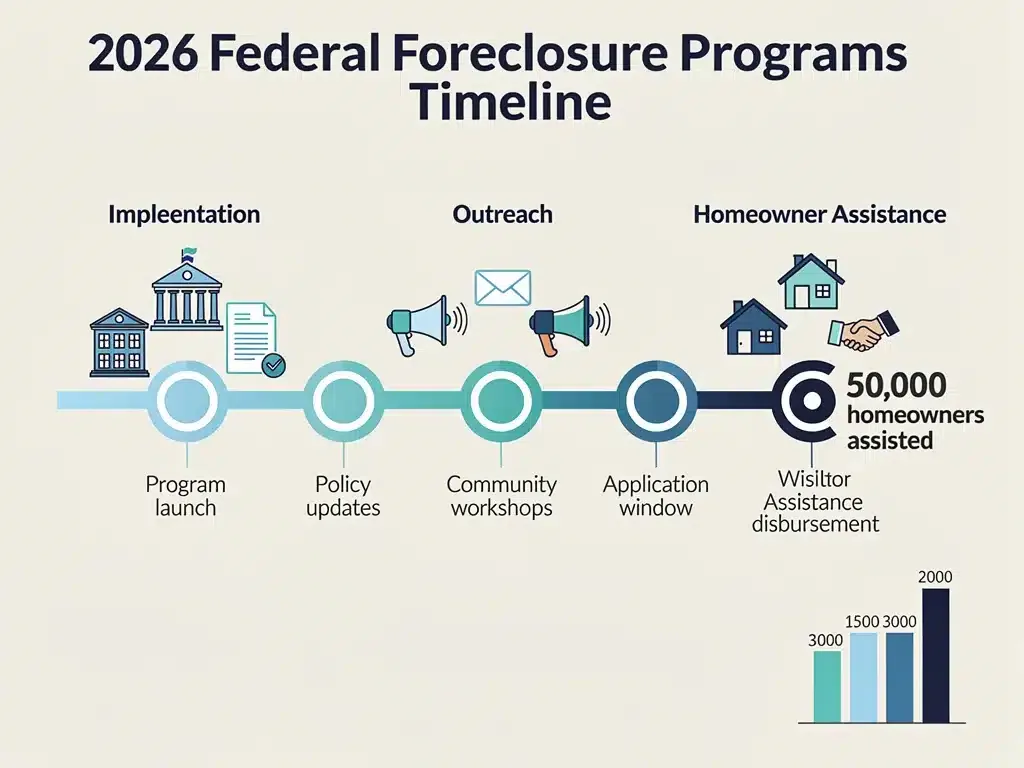
Anticipated Impact and Future Outlook for 2026
The anticipated impact of the federal foreclosure programs 2026 is substantial, with projections indicating a significant reduction in foreclosure rates and enhanced housing stability for thousands of families.
This will have positive ripple effects throughout the economy.
By preventing foreclosures, these programs help preserve property values, stabilize neighborhoods, and reduce the strain on local social services. The long-term benefits extend to the broader financial ecosystem.
The success of these initiatives will also inform future federal housing policies, potentially leading to more robust and permanent support structures for homeowners. This long-term vision is critical for sustained economic health.
Challenges and Mitigation Strategies
Implementing programs of this scale is not without challenges. These include ensuring adequate funding, managing administrative complexities, and effectively reaching all eligible homeowners.
Federal agencies are developing robust mitigation strategies.
Public awareness campaigns are being rolled out to inform homeowners about the available assistance. Continuous training for housing counselors and program administrators is also a priority to ensure consistent and accurate information delivery.
Furthermore, regular evaluations and feedback mechanisms will allow for ongoing adjustments and improvements to the programs. This adaptive approach is crucial for overcoming unforeseen obstacles and maximizing effectiveness.
| Key Program Aspect | Brief Description |
|---|---|
| Target Homeowners | Aim to assist 50,000 homeowners facing foreclosure risk in 2026. |
| Core Assistance | Direct financial aid, loan modifications, and comprehensive housing counseling. |
| Eligibility Focus | Primarily targets homeowners demonstrating financial hardship and specific income criteria. |
| Long-term Goal | Promote sustainable homeownership and financial stability through education and support. |
Frequently Asked Questions About Federal Foreclosure Programs 2026
What are the primary goals of the New Federal Programs to Combat Foreclosures in 2026?▼The primary goals include preventing foreclosures, stabilizing the housing market, and providing financial relief to 50,000 vulnerable homeowners across the United States. These programs aim to offer both immediate and long-term solutions for housing security.
Who is eligible for assistance under these federal programs?▼Eligibility typically requires homeowners to demonstrate genuine financial hardship, occupy the property as their primary residence, and meet specific income guidelines. Specific criteria may vary, so consulting an approved housing counselor is recommended.
What types of assistance do the 2026 federal foreclosure programs offer?▼Assistance can include mortgage payment aid, principal reductions, loan modifications, and comprehensive housing counseling services. These options are designed to tailor support to individual homeowner needs and financial situations.
How can homeowners apply for the New Federal Programs to Combat Foreclosures in 2026?▼The application process is being streamlined, often involving online portals and support from local housing agencies and non-profit organizations. Homeowners should gather financial documents and contact a housing counselor for guidance on applying.
What long-term benefits are expected from these foreclosure prevention programs?▼Beyond immediate relief, the programs aim for long-term homeowner stability through financial literacy education and sustained support. This fosters a more resilient homeowner base, reducing susceptibility to future economic shocks and preserving community stability.
Looking Ahead: Sustaining Housing Stability
The launch of the New Federal Programs to Combat Foreclosures in 2026: Assisting 50,000 Homeowners This Year marks a pivotal moment in federal housing policy.
These initiatives not only offer immediate relief but also lay the groundwork for a more stable and equitable housing future.
The effectiveness of these programs will be closely monitored, with adjustments made as needed to maximize their impact. Homeowners, housing advocates, and financial institutions all have a role to play in ensuring their success.
For individuals currently facing financial hardship or navigating difficult mortgage terms, exploring these federal initiatives and understanding your legal options can prevent long-term displacement.
To review eligibility requirements and official guidance on keeping your home, you can access the administration’s resources on how to avoid foreclosure through USA.gov.
Ultimately, these efforts reflect a broader commitment to supporting American families and strengthening the housing market against future economic uncertainties.
The coming year will be critical in demonstrating the full potential of these vital federal programs.