Medicare Part D 2026: Save 15% on Prescriptions
Advertisements
Latest developments on Medicare Part D 2026, with key facts, verified sources and what readers need to monitor next in the United States, presented clearly in English (United States).
Medicare Part D 2026 is shaping today’s agenda with new details released by officials and industry sources. This update prioritizes what changed, why it matters, and what to watch next, in a straightforward news format.
Understanding the Evolving Landscape of Medicare Part D 2026
The pharmaceutical landscape in the United States is constantly shifting, and with it, the intricacies of Medicare Part D. For beneficiaries, staying informed about these changes is not merely recommended but essential to managing healthcare expenditures effectively.
As we look towards 2026, significant adjustments are on the horizon for Medicare Part D, promising both challenges and opportunities. These upcoming revisions aim to refine the program, impacting how millions access and pay for their prescription medications.
Navigating these changes can seem daunting, yet understanding the core modifications can empower beneficiaries to make informed decisions. The goal remains to ensure access to necessary medications while mitigating financial burdens, a critical balance for many seniors.
Key Legislative Changes Impacting Medicare Part D 2026
The Inflation Reduction Act (IRA) of 2022 serves as the primary legislative driver behind many of the impending changes to Medicare Part D. This landmark legislation introduces several provisions designed to lower drug costs for beneficiaries and the Medicare program itself.
These provisions are being phased in over several years, with 2026 marking a crucial point in their implementation. Beneficiaries must grasp the specifics of these legislative shifts to anticipate their personal financial impacts and adjust their coverage choices accordingly.
The changes extend beyond simple price adjustments, touching upon aspects such as out-of-pocket spending limits and the structure of drug plan benefits. This comprehensive overhaul demands careful attention from all stakeholders involved in Medicare Part D.
Inflation Reduction Act’s Influence on Drug Costs
One of the most significant impacts of the IRA is the ability for Medicare to negotiate drug prices for certain high-cost medications. While this process began for a limited number of drugs in 2023, its scope will expand, directly influencing the prices beneficiaries pay under Medicare Part D 2026.
The legislation also includes penalties for pharmaceutical companies that raise prices faster than inflation, a measure designed to curb escalating drug costs. These mechanisms are expected to contribute to the overall goal of reducing prescription expenses for seniors.
Redefining the Part D Benefit Structure
The IRA introduces a fundamental redesign of the Medicare Part D benefit structure, particularly concerning out-of-pocket costs. For 2025, a $2,000 cap on out-of-pocket spending is set to take effect, a significant relief for those with high prescription drug needs.
This cap will eliminate the catastrophic phase of coverage, where beneficiaries currently pay 5% of drug costs with no upper limit. The transition to a fixed out-of-pocket maximum is a monumental shift, offering predictable and manageable costs for beneficiaries in Medicare Part D 2026.
Strategies for Maximizing Savings with Medicare Part D 2026
With the forthcoming changes, beneficiaries have an unprecedented opportunity to optimize their prescription drug coverage and achieve substantial savings. Proactive engagement with plan selection and drug management is key to unlocking these benefits.
Understanding the nuances of different plan offerings and how they align with individual medication needs will be paramount. A strategic approach can lead to considerable financial relief, particularly for those managing chronic conditions.
The goal is not just to enroll in any plan, but to select the most cost-effective option that comprehensively covers necessary medications. This requires careful research and comparison to ensure optimal utilization of Medicare Part D 2026.
Annual Plan Review and Comparison
Each year, Medicare Part D plans can change their formularies, premiums, and cost-sharing structures. An annual review during the Open Enrollment Period (October 15 to December 7) is critical to ensure your current plan still meets your needs for Medicare Part D 2026.
Utilizing Medicare’s plan finder tool is an invaluable resource for comparing available plans in your area. Inputting your specific medications allows the tool to project your estimated out-of-pocket costs for each plan, providing a clear financial comparison.
Leveraging Generics and Preferred Pharmacies
Generic medications typically cost significantly less than their brand-name counterparts. Discussing generic alternatives with your doctor can lead to substantial savings without compromising treatment efficacy under Medicare Part D 2026.
Many Medicare Part D plans offer lower cost-sharing when prescriptions are filled at preferred pharmacies within their network. Identifying and utilizing these pharmacies can reduce your out-of-pocket expenses, making your plan more economical.
Understanding the Out-of-Pocket Cap in Medicare Part D 2026
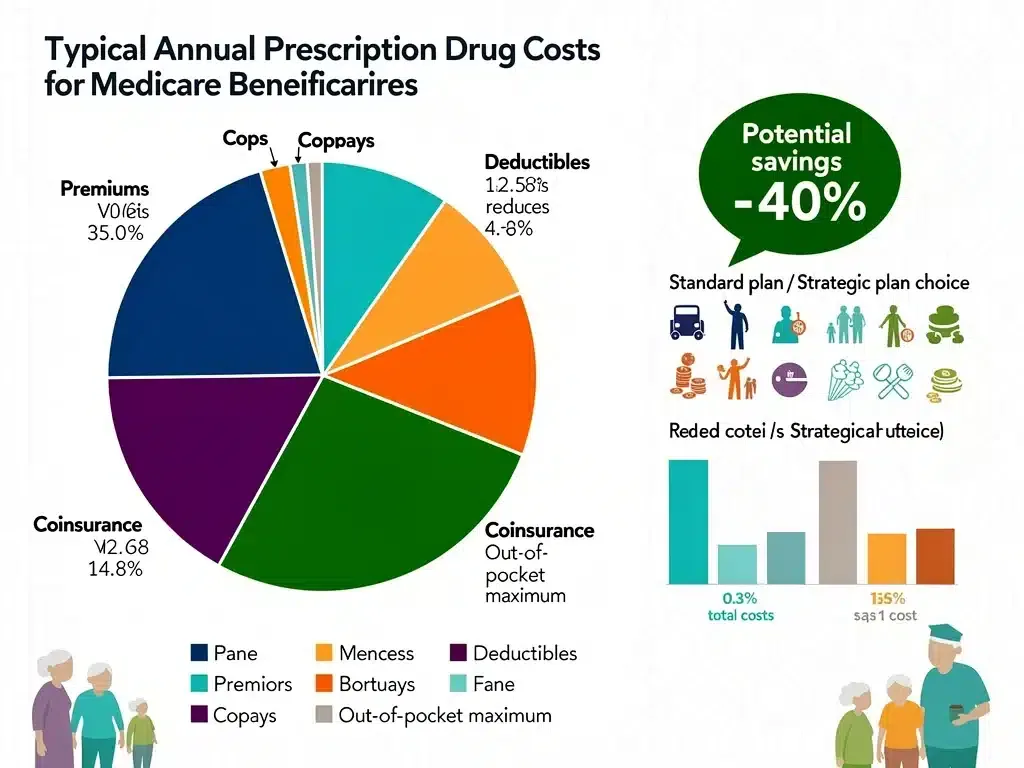
The introduction of the $2,000 out-of-pocket spending cap in 2025, which will continue into Medicare Part D 2026, represents a monumental shift for beneficiaries. This cap provides a much-needed financial safeguard for those with high prescription drug costs.
Before this change, beneficiaries could face unlimited out-of-pocket expenses once they entered the catastrophic phase of coverage. The new cap provides predictability and peace of mind, significantly reducing the risk of financial hardship due to medication costs.
This provision is particularly beneficial for individuals managing complex or chronic conditions that require expensive specialty drugs. It ensures that regardless of the cost of their medications, their annual out-of-pocket spending on covered drugs will not exceed $2,000.
Impact on High-Cost Drug Users
For beneficiaries requiring high-cost medications, the $2,000 out-of-pocket cap is a game-changer. It means that once they reach this limit, they will pay nothing for their covered prescription drugs for the remainder of the year under Medicare Part D 2026.
This provides a crucial safety net, allowing individuals to access essential treatments without the fear of astronomical bills. It also simplifies financial planning, as beneficiaries can budget for a fixed maximum annual drug cost.
Redistribution of Costs within the Program
While the out-of-pocket cap benefits beneficiaries, the costs associated with this change are absorbed by drug manufacturers, Medicare, and Part D plans. This redistribution aims to make the program more sustainable and equitable.
Part D plans will see a reduced share of costs in the catastrophic phase, while drug manufacturers will bear a greater responsibility. This shift is intended to incentivize lower drug prices and more responsible pricing practices within the pharmaceutical industry, influencing Medicare Part D 2026.
Navigating the Enrollment Process for Medicare Part D 2026
The annual Open Enrollment Period is the crucial window for making changes to your Medicare Part D coverage. Understanding the deadlines and steps involved is vital to ensure continuous and appropriate coverage for Medicare Part D 2026.
Missing enrollment deadlines or failing to review your plan can lead to higher costs or gaps in coverage. Therefore, beneficiaries must mark their calendars and prepare to actively engage with the enrollment process.
Even if you are satisfied with your current plan, reviewing it annually is a best practice. Plans change, and your medication needs might too, making an annual assessment indispensable for optimal Medicare Part D 2026 coverage.
Important Dates and Deadlines
The Medicare Open Enrollment Period runs from October 15 to December 7 each year. During this time, beneficiaries can join, switch, or drop a Medicare Part D plan, with changes taking effect on January 1 of the following year, including for Medicare Part D 2026.
It is important to note that certain life events, such as moving or losing other credible drug coverage, may trigger a Special Enrollment Period (SEP). These SEPs allow for changes outside the standard enrollment window.
Resources for Plan Selection
Medicare.gov’s Plan Finder tool is the official and most comprehensive resource for comparing Medicare Part D plans. It allows you to enter your medications and dosages to get personalized cost estimates for each available plan.
State Health Insurance Assistance Programs (SHIPs) offer free, unbiased counseling to Medicare beneficiaries. These programs can provide invaluable assistance in understanding plan options and making informed decisions for Medicare Part D 2026.
Impact on Premiums and Formularies for Medicare Part D 2026
The legislative changes and structural redesign of Medicare Part D will inevitably influence plan premiums and formularies. Beneficiaries should anticipate these potential shifts when evaluating their options for Medicare Part D 2026.
While the overall aim is to reduce out-of-pocket costs, individual plan premiums may vary based on how plans adjust to the new benefit structure and drug negotiation policies. Careful examination of these factors is essential.
Formularies, or lists of covered drugs, are also subject to change. A drug that was covered by your plan in 2025 might have different coverage terms or even be removed from the formulary in 2026, necessitating a re-evaluation of your plan choice.
Premium Adjustments and Cost-Sharing
The introduction of the out-of-pocket cap and other IRA provisions could lead to adjustments in monthly premiums for Medicare Part D 2026 plans. Some plans might adjust premiums to account for the new risk structure and cost-sharing responsibilities.
Beneficiaries should scrutinize not only the premium but also the deductible, copayments, and coinsurance amounts for their specific medications. A low premium might not always translate to the lowest overall cost if other cost-sharing is high.
Changes to Covered Drug Lists
Drug formularies are dynamic and can change annually. Plans may add or remove drugs, or change the tier on which a drug is placed, affecting your out-of-pocket cost. It is crucial to verify that all your necessary medications are covered by any prospective plan for Medicare Part D 2026.
If a critical medication is removed or moved to a higher tier, it might be necessary to switch plans or discuss alternative medications with your healthcare provider. Timely review of the formulary is a key step in preventing unexpected costs.
Achieving a 15% Saving Target on Prescriptions in Medicare Part D 2026
While a 15% saving target is ambitious, it is certainly attainable for many beneficiaries through strategic planning and informed choices. The confluence of legislative changes and proactive engagement creates a fertile ground for significant cost reductions in Medicare Part D 2026.
The key lies in a multi-faceted approach that combines understanding the new benefits, diligently comparing plans, and actively managing your medication regimen. Small adjustments across several areas can accumulate into substantial overall savings.
This level of saving isn’t a guarantee for everyone, but it represents a realistic goal for those who are willing to invest time in researching and optimizing their Medicare Part D coverage. The tools and resources are available; it’s about utilizing them effectively.
Personalized Plan Optimization
The most effective way to achieve significant savings is through personalized plan optimization. This involves a thorough analysis of your specific prescription needs, including drug names, dosages, and frequency, against all available Medicare Part D 2026 plans.
Consider not just the annual premium, but also the deductible, copayments, and whether your preferred pharmacies are in-network. The goal is to find the plan that offers the lowest total out-of-pocket cost for your unique medication profile.
Proactive Medication Management
Working closely with your doctor to explore lower-cost alternatives, such as generics or preferred brand-name drugs, can directly contribute to savings. Asking about 90-day supplies for maintenance medications can also reduce pharmacy visit copayments.
Additionally, inquiring about patient assistance programs offered by pharmaceutical companies or non-profit organizations can provide further financial relief, especially for high-cost drugs not fully covered by your Medicare Part D 2026 plan.
Future Outlook and Continued Evolution of Medicare Part D 2026
The changes implemented for Medicare Part D 2026 are part of an ongoing evolution of the program, driven by legislative efforts to control healthcare costs and improve beneficiary access. This indicates that further refinements and adjustments are likely in the years to come.
Beneficiaries should view 2026 not as a final destination but as another significant milestone in the dynamic landscape of prescription drug coverage. Staying abreast of future legislative discussions and policy proposals will remain essential.
The long-term goal of the program is to ensure affordability and accessibility of necessary medications for all eligible seniors. This continuous effort means that vigilance and adaptability will always be key for Medicare Part D beneficiaries.
Monitoring Legislative Developments
Future legislative actions could introduce additional changes to drug pricing, benefit design, or eligibility criteria. Keeping an eye on news from Congress and relevant federal agencies will provide early warnings of potential impacts on Medicare Part D 2026 and beyond.
Advocacy groups and consumer organizations often provide timely updates and analysis of proposed changes. Subscribing to their newsletters can be a good way to stay informed about the evolving policy landscape.
Adapting to Program Adjustments
The ability to adapt to changes in Medicare Part D is crucial for maintaining optimal coverage and managing costs. This includes being open to switching plans, discussing alternative medications with your doctor, and utilizing all available resources.
The program is designed to be reviewed and adjusted periodically to meet the needs of beneficiaries and the fiscal realities of the healthcare system. Embracing this dynamic nature is part of being an informed Medicare Part D beneficiary.
| Key Point | Brief Description |
|---|---|
| Out-of-Pocket Cap | A $2,000 annual limit on prescription drug costs for beneficiaries. |
| IRA Impact | Inflation Reduction Act drives changes, including drug price negotiation. |
| Annual Review | Crucial for optimizing coverage during Open Enrollment (Oct 15 – Dec 7). |
| Savings Strategies | Utilize generics, preferred pharmacies, and personalized plan comparison. |
Frequently Asked Questions About Medicare Part D 2026
What is the most significant change for Medicare Part D 2026 beneficiaries?▼The most significant change is the implementation of a $2,000 annual out-of-pocket spending cap on prescription drugs, effective from 2025 and continuing into Medicare Part D 2026. This cap provides a crucial financial safety net, particularly for individuals with high medication costs.
How can I save 15% on my prescription costs in Medicare Part D 2026?▼Achieving significant savings involves several strategies: comparing plans annually using Medicare’s Plan Finder, opting for generic medications when available, utilizing preferred pharmacies, and exploring patient assistance programs. Personalized plan optimization is key to maximizing your benefits under Medicare Part D 2026.
When is the Open Enrollment Period for Medicare Part D 2026?▼The annual Open Enrollment Period for Medicare Part D, including for 2026 plans, runs from October 15 to December 7 each year. During this time, you can enroll, switch, or drop a plan, with changes becoming effective on January 1 of the following year.
Will my current Medicare Part D plan automatically adjust to the new 2026 rules?▼While your current plan will incorporate the new rules for Medicare Part D 2026, its specific benefits, premiums, and formulary may change. It is crucial to review your plan’s Annual Notice of Change (ANOC) and compare it with other available options during Open Enrollment to ensure it still meets your needs.
Where can I find reliable information and assistance for choosing a Medicare Part D 2026 plan?▼Reliable information can be found on Medicare.gov, particularly their Plan Finder tool. Additionally, State Health Insurance Assistance Programs (SHIPs) offer free, unbiased counseling to help beneficiaries understand their options and make informed decisions about Medicare Part D 2026.
What this means
The updates to Medicare Part D 2026 signify a significant shift in prescription drug coverage, primarily driven by the Inflation Reduction Act. These changes offer substantial financial protection for beneficiaries, particularly the $2,000 out-of-pocket cap. Understanding these modifications and actively engaging in plan selection during Open Enrollment are critical steps for maximizing savings and ensuring comprehensive coverage. Ongoing vigilance regarding legislative developments and plan adjustments will remain essential for all Medicare Part D beneficiaries.