Understanding Survivor Benefits in 2026: Claiming Up to 82.5%
Latest developments on Understanding Survivor Benefits in 2026: Claiming Up to 82.5% of Your Deceased Spouse’s Social Security, with key facts, verified sources and what readers need to monitor next in Estados Unidos, presented clearly in Inglês (Estados Unidos) (en-US).
Understanding Survivor Benefits in 2026: Claiming Up to 82.5% of Your Deceased Spouse’s Social Security is shaping today’s agenda with new details released by officials and industry sources. This update prioritizes what changed, why it matters and what to watch next, in a straightforward news format.
Understanding Survivor Benefits in 2026: The Basics
Survivor Benefits in 2026 are a crucial component of Social Security, designed to provide financial support to the family members of a deceased worker. These benefits can be a lifeline for widows, widowers, and dependent children, offering a measure of financial stability during a difficult time.
The Social Security Administration (SSA) continuously evaluates and adjusts its programs, and 2026 is no exception. Understanding these foundational elements is the first step toward effectively claiming what you are entitled to.
Knowing the basics of Survivor Benefits in 2026 ensures that eligible individuals can navigate the application process with confidence and secure their future. It is not merely about claiming a benefit, but understanding the system designed to protect families.
Eligibility Criteria for Survivor Benefits in 2026
To qualify for Survivor Benefits in 2026, specific criteria must be met, primarily revolving around the relationship to the deceased worker and the deceased’s work history. The SSA determines eligibility based on these factors, ensuring that benefits are distributed appropriately.
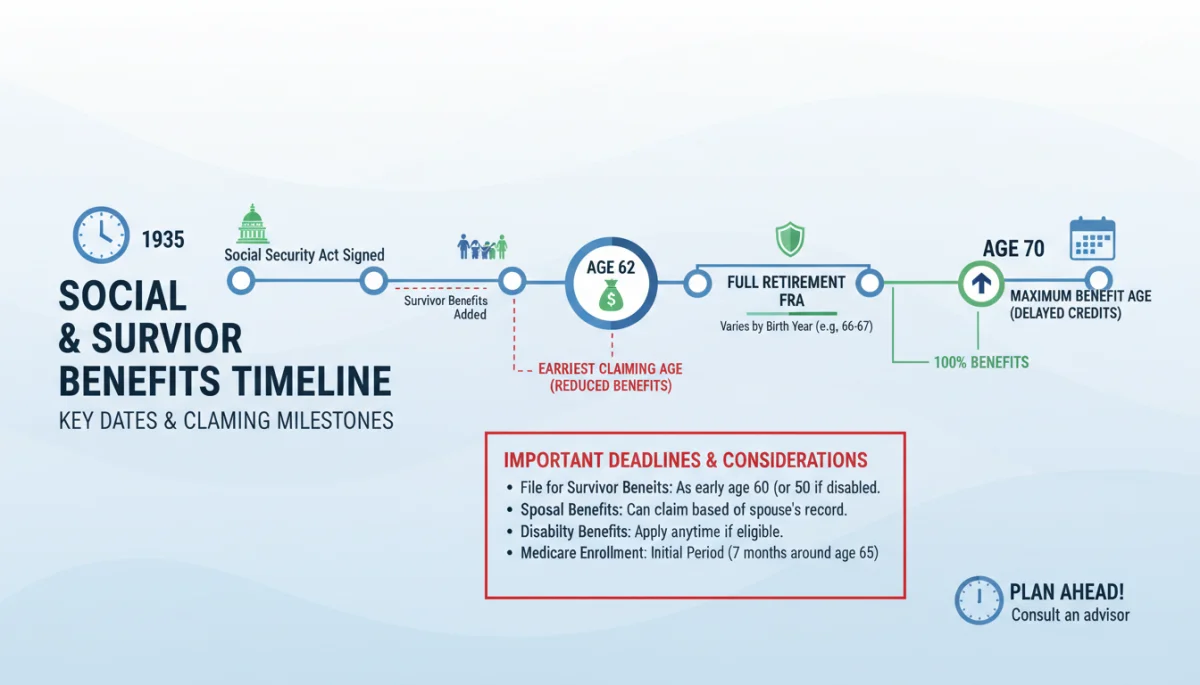
Widows and widowers generally need to be at least 60 years old (50 if disabled) to claim benefits, or any age if they are caring for the deceased’s child who is under age 16 or disabled. Dependent unmarried children under 18 (or 19 if still in high school) are also typically eligible.
Other family members, such as parents or grandchildren, may also qualify under certain conditions, making it essential to review all potential avenues for Survivor Benefits in 2026. The rules are designed to cover a broad spectrum of familial relationships.
Who Qualifies for Survivor Benefits?
Spouses, including divorced spouses, may qualify for benefits if they meet specific age and marital duration requirements. Children, including stepchildren, adopted children, and dependent grandchildren, are often eligible if they are unmarried and meet age or disability criteria.
Parents of the deceased worker can also receive benefits if they were dependent on the worker for at least half of their support. Each category has distinct rules that applicants must understand to ensure a successful claim for Survivor Benefits in 2026.
The SSA’s guidelines are detailed, and it’s advisable to consult their official resources or a financial advisor to confirm individual eligibility. This ensures that no potential beneficiary is overlooked when considering survivor benefits.
- Widows/Widowers: Age 60 (or 50 if disabled), or caring for a child under 16.
- Divorced Spouses: Married for at least 10 years, not remarried before age 60 (or 50 if disabled).
- Children: Unmarried, under 18 (or 19 if in high school), or disabled before age 22.
- Dependent Parents: Age 62 or older, and dependent on the deceased for at least half their support.
Calculating Your Survivor Benefits in 2026
The amount of Survivor Benefits in 2026 you can claim is not a fixed sum; it depends on several factors, most notably the deceased worker’s earnings record and your relationship to them. The goal is to provide a percentage of the deceased’s basic Social Security benefit.
For example, a widow or widower who waits until their full retirement age to claim benefits can receive 100% of the deceased worker’s basic amount. However, claiming earlier, such as at age 60, will result in a reduced benefit, typically around 71.5%.
The maximum benefit you can receive as a survivor is 82.5% of the deceased’s primary insurance amount if you claim at age 60. This percentage can vary based on your age and other factors, making careful calculation essential for maximizing your Survivor Benefits in 2026.
Claiming Up to 82.5% of Your Deceased Spouse’s Social Security
To claim the maximum of 82.5% of your deceased spouse’s Social Security, you generally need to be a widow or widower claiming benefits at age 60. This is a common scenario, but it’s important to understand the nuances of early claiming.
If you claim benefits between age 60 and your full retirement age, your benefit amount will be permanently reduced. The 82.5% figure represents the maximum reduction allowed while still providing significant support for those who need to claim early.
Careful consideration of your financial situation and future plans is crucial before deciding when to claim your Survivor Benefits in 2026. Delaying benefits, if possible, can lead to a higher monthly payment.
The Application Process for Survivor Benefits in 2026
Applying for Survivor Benefits in 2026 involves several steps and requires specific documentation. The process can seem daunting, but breaking it down into manageable stages can ease the burden during an already difficult time.
The first step is to gather all necessary documents, including proof of death, your birth certificate, your marriage certificate (if applicable), and the deceased worker’s Social Security number. Having these ready will expedite the application.
You can apply for Survivor Benefits in 2026 by calling the SSA, visiting a local Social Security office, or in some cases, applying online. It’s often recommended to call first to understand specific requirements and make an appointment.
Required Documents and Information
When applying for Survivor Benefits in 2026, you will need to provide various documents to prove your eligibility. These include the deceased’s death certificate, your birth certificate, and your marriage certificate if you are a widow or widower.
You may also need the deceased worker’s W-2 forms or self-employment tax returns for the past two years, as well as information about any other benefits you may be receiving. Accurate and complete documentation is key to a smooth application process for Survivor Benefits in 2026.
Having all required information organized before you begin the application will save time and prevent potential delays. The SSA website offers comprehensive checklists to guide applicants.
- Deceased worker’s Social Security number.
- Proof of death (death certificate).
- Your birth certificate and marriage certificate (if applicable).
- Deceased worker’s W-2 forms or self-employment tax returns for the last two years.
Impact of Earnings on Survivor Benefits in 2026
If you are working while receiving Survivor Benefits in 2026, your earnings can affect the amount of your benefit. The Social Security Administration has specific rules regarding how much you can earn before your benefits are reduced.
These earnings limits vary each year, so it’s crucial to stay updated on the current thresholds for 2026. If your earnings exceed these limits, a portion of your benefits may be withheld.
Understanding these limits is vital for financial planning, especially when considering when to claim your Survivor Benefits in 2026. It allows beneficiaries to make informed decisions about their work and retirement plans.
Social Security Earnings Test
The Social Security earnings test applies to beneficiaries who are below their full retirement age. If you are working and receiving Survivor Benefits in 2026, and you are under your full retirement age, the SSA will withhold a portion of your benefits if your earnings exceed a certain limit.
For individuals reaching full retirement age during the year, a higher earnings limit applies, and the reduction in benefits is less severe. Once you reach your full retirement age, the earnings test no longer applies, and you can earn any amount without affecting your benefits.
It’s important to monitor your earnings and understand how they interact with your Survivor Benefits in 2026 to avoid unexpected reductions. The SSA provides detailed information on these earnings limits annually.
Coordination with Other Social Security Benefits
It’s important to understand how Survivor Benefits in 2026 may interact with other Social Security benefits you might be eligible for, such as your own retirement benefits. The SSA generally pays the higher of the two benefit amounts.
This means if you are eligible for both your own retirement benefit and a survivor benefit, you typically won’t receive both in full. Instead, you’ll receive an amount equivalent to the larger of the two benefits.
Strategic planning around claiming age for both your retirement and Survivor Benefits in 2026 can significantly impact your total lifetime benefits. It’s a complex area that often benefits from professional guidance.
Choosing the Best Claiming Strategy
For many individuals, particularly widows and widowers, deciding when to claim their own retirement benefits versus their Survivor Benefits in 2026 can be a critical financial decision. One common strategy is to claim the survivor benefit first, especially if it’s higher, while allowing your own retirement benefit to grow.
Your own retirement benefit increases each year you delay claiming it, up to age 70, through delayed retirement credits. By claiming the survivor benefit early, you can provide immediate income while potentially maximizing your future retirement benefit.
Conversely, if your own retirement benefit is higher, it might be more advantageous to claim the survivor benefit first, if eligible, and then switch to your own higher retirement benefit later. This dual eligibility requires careful consideration to optimize your total Survivor Benefits in 2026.
Recent Changes and Updates for 2026
The landscape of Social Security benefits, including Survivor Benefits in 2026, is subject to periodic adjustments and legislative changes. Staying informed about these updates is crucial for current and prospective beneficiaries.
While the core structure of survivor benefits remains consistent, minor adjustments to cost-of-living allowances (COLAs), earnings limits, and application procedures can occur. These changes directly impact the financial well-being of eligible individuals.
The Social Security Administration regularly publishes official announcements regarding any updates to its programs. Consulting these official sources is the most reliable way to stay informed about changes to Survivor Benefits in 2026.
Anticipated Adjustments to Survivor Benefits
As 2026 approaches, beneficiaries should anticipate potential adjustments in COLA, which directly affects the monthly benefit amount. These adjustments are designed to help benefits keep pace with inflation and maintain purchasing power.
Additionally, earnings limits are typically updated annually, so those working while receiving benefits should monitor these changes closely. Understanding these anticipated adjustments is key to effective financial planning for your Survivor Benefits in 2026.
While major legislative overhauls are less frequent, minor programmatic tweaks are common. Staying proactive in seeking information about these changes ensures that you are always operating with the most current understanding of your Survivor Benefits in 2026.
Common Misconceptions About Survivor Benefits
Despite their importance, many misconceptions surround Survivor Benefits in 2026, leading to confusion and sometimes missed opportunities. Clarifying these myths is essential for beneficiaries to make informed decisions.
One common myth is that claiming survivor benefits automatically reduces your own retirement benefits. While there is coordination, it doesn’t always mean a reduction, and strategic claiming can maximize overall benefits.
Another misconception is that survivor benefits are only for elderly widows or widowers. In reality, children and even divorced spouses can be eligible under specific circumstances, broadening the scope of eligibility for Survivor Benefits in 2026.
Debunking Key Myths
Many believe that if they remarry, they instantly lose all eligibility for survivor benefits. This is not always true; if you remarry after age 60 (or 50 if disabled), you can still be eligible for Survivor Benefits in 2026.
Another myth is that the application process is too complex and not worth the effort. While it requires documentation, the SSA provides ample resources and assistance to guide applicants through the process for Survivor Benefits in 2026.
Understanding these common misconceptions empowers individuals to seek accurate information and ensure they claim all the benefits they are entitled to. It is vital to consult official SSA sources to dispel any doubts about Survivor Benefits in 2026.
| Key Point | Brief Description |
|---|---|
| Eligibility Criteria | Age, relationship to deceased, and work history determine who qualifies for benefits. |
| Benefit Calculation | Benefits are based on deceased’s earnings; claiming age impacts the percentage received. |
| Application Process | Requires specific documents and can be done online, by phone, or in person. |
| Earnings Impact | Working while receiving benefits can reduce payments if earnings exceed limits. |
Frequently Asked Questions About Survivor Benefits
Eligible individuals typically include widows, widowers, divorced spouses, and dependent children or parents of a deceased worker. Specific age and relationship criteria must be met, such as being at least 60 years old for a widow or widower, or a child under 18.
You can claim up to 82.5% of your deceased spouse’s Social Security benefit if you claim at age 60. The exact percentage depends on your age at the time of claiming, with a higher percentage if you wait until your full retirement age.
Yes, if you are under your full retirement age and working, your earnings can reduce your Survivor Benefits. The Social Security Administration sets annual earnings limits, and exceeding these limits will result in a reduction of your benefits.
You can be eligible for both, but the SSA will generally pay you the higher of the two amounts. Strategic claiming can allow you to receive one benefit while letting the other grow, potentially maximizing your total lifetime benefits.
You will need the deceased worker’s Social Security number and death certificate, your birth certificate, and your marriage certificate (if applicable). Other documents like W-2s or tax returns may also be required for the application process.
Looking Ahead: Ensuring Financial Security
The information on Understanding Survivor Benefits in 2026: Claiming Up to 82.5% of Your Deceased Spouse’s Social Security provides a foundational understanding for current and future beneficiaries. It underscores the importance of proactive financial planning and staying informed about Social Security regulations.
As economic conditions and legislative priorities evolve, the framework for these vital benefits may see further adjustments. Therefore, continuous engagement with official SSA communications and seeking expert advice remains paramount.
Ensuring financial security through proper handling of Survivor Benefits in 2026 is not just about navigating an application; it’s about securing peace of mind. The ability to claim up to 82.5% represents a significant resource for many families.