Understanding Survivors Benefits in 2026: A 4-Point Checklist
Advertisements

In 2026, federal social safety net policies have transitioned into an era of “Precision Benefit Calibration.”
Driven by legislative updates designed to reinforce fund sustainability, the administrative framework governing auxiliary disbursements has become highly standardized.
This update outlines vital strategies for Understanding Your 2026 Survivors Benefits, detailing the exact steps needed to claim up to 82.5% of a deceased worker’s Social Security to ensure crucial household stability and long-term financial health.
Navigating 2026 Survivors Benefits: Key Changes and Eligibility
The Social Security Administration (SSA) continuously updates its guidelines, and 2026 brings specific nuances for survivors.
Understanding these changes is crucial for eligible individuals seeking financial stability after the loss of a loved one.
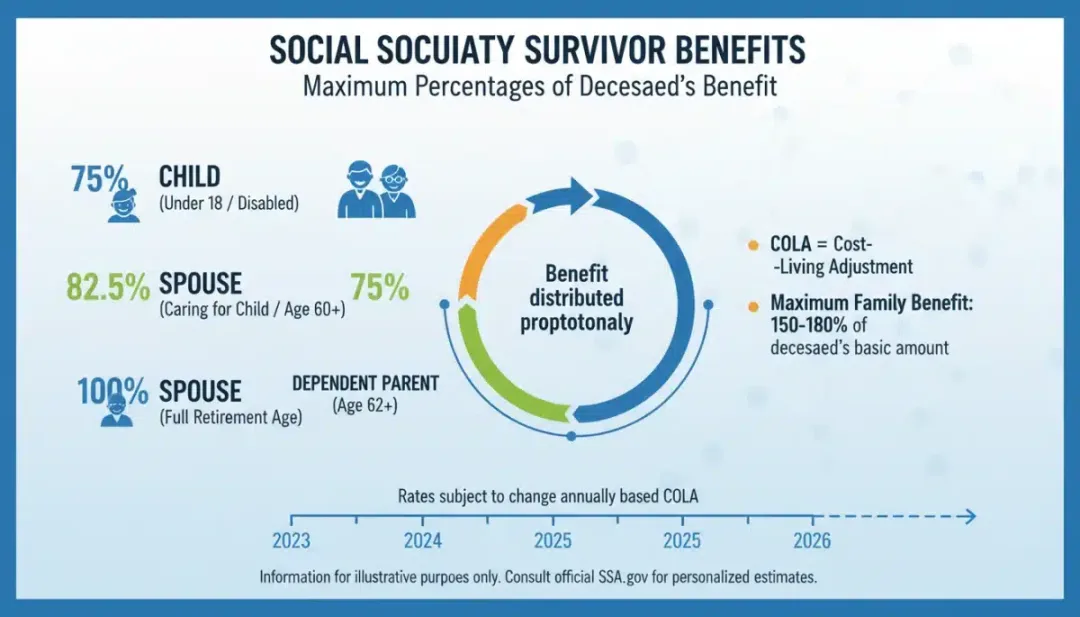
These updates affect who can claim benefits and the maximum percentages available, which can reach up to 82.5% of the deceased’s Social Security amount.
Timely information ensures beneficiaries can effectively plan their financial future.
This section outlines the primary modifications and eligibility criteria for 2026 Survivors Benefits, providing a foundational understanding for prospective claimants.
Who is Eligible for 2026 Survivors Benefits?
Eligibility for 2026 Survivors Benefits primarily extends to certain family members of a deceased worker who earned enough Social Security credits. This typically includes a spouse, unmarried children, and dependent parents.
Specific conditions apply to each category, such as age for spouses and children, or dependency for parents. These criteria remain largely consistent but are subject to minor adjustments annually.
- Widows/Widowers: Generally eligible at age 60 (or 50 if disabled), or at any age if caring for the deceased’s child under 16 or disabled.
- Children: Unmarried children under 18 (or 19 if still in high school) or disabled children of any age if the disability began before age 22.
- Dependent Parents: Parents aged 62 or older who were dependent on the deceased for at least half of their support.
Understanding the 82.5% Maximum Benefit
The 82.5% figure represents the maximum individual benefit a surviving spouse or child can receive, though the family maximum can exceed this. This percentage is a critical factor in calculating the financial impact for beneficiaries.
Factors such as the deceased’s average lifetime earnings and the survivor’s age influence the actual percentage received. It’s not a flat rate, but a ceiling for individual claims within the family unit.
This maximum aims to provide substantial support while ensuring the overall Social Security system remains sustainable for all beneficiaries.
Application Process for 2026 Survivors Benefits
Applying for 2026 Survivors Benefits involves a structured process with specific documentation requirements and deadlines. Initiating the application promptly after a death is advisable to avoid delays in receiving crucial financial support.
The Social Security Administration provides various avenues for application, including online, by phone, or in person at a local office. Each method requires careful attention to detail and submission of all necessary paperwork.
Understanding these procedural steps is essential for a smooth and successful claim for 2026 Survivors Benefits.
Required Documentation for Claiming Benefits
To successfully claim 2026 Survivors Benefits, applicants must gather a range of personal and financial documents. This typically includes the deceased’s death certificate, their Social Security number, and proof of relationship to the deceased.
Additional documents may be required depending on the applicant’s specific situation, such as birth certificates for children or marriage certificates for spouses. Having these ready streamlines the application process significantly.
- Deceased’s Documents: Death certificate, Social Security number, most recent W-2 forms or self-employment tax returns.
- Applicant’s Documents: Birth certificate, marriage certificate (if applicable), Social Security number, bank account information for direct deposit.
- Children’s Documents: Birth certificates, school records (if applicable for students over 18).
Timelines and Important Deadlines
While there isn’t a strict deadline for applying for survivors benefits, it is generally recommended to apply as soon as possible after the death. Delays can impact the start date of benefit payments.
Certain lump-sum death benefits have a limited timeframe for application, typically within two years of the death. Being aware of these specific timelines is vital for maximizing potential benefits.
The SSA aims to process applications efficiently, but complete and accurate submissions are key to avoiding unnecessary processing delays for your 2026 Survivors Benefits.
Financial Impact and Practical Solutions for 2026 Survivors Benefits
The financial impact of 2026 Survivors Benefits can be significant, providing a vital safety net for families facing loss. Understanding how these benefits integrate into overall financial planning is crucial for long-term stability.
These benefits are designed to replace a portion of the deceased worker’s income, helping to cover living expenses, education costs, and other financial obligations. Strategic planning around these funds can make a substantial difference.
This section explores the financial implications and offers practical solutions for managing and maximizing your 2026 Survivors Benefits.
Integrating Benefits into Household Budgeting
Once approved, 2026 Survivors Benefits become a regular income stream that should be factored into your household budget. This helps in understanding your new financial landscape and making informed spending decisions.
Creating a detailed budget that includes these benefits can help identify areas for saving, manage debt, and plan for future expenses. This proactive approach ensures financial resilience.
Effective budgeting allows beneficiaries to stretch their 2026 Survivors Benefits further, providing peace of mind during a challenging time.
Potential Tax Implications of Survivors Benefits
It is important to be aware that 2026 Survivors Benefits may be subject to federal income tax, depending on your total income. This is a critical consideration for financial planning.
Beneficiaries whose combined income (including Social Security benefits) exceeds certain thresholds may find a portion of their benefits taxable. Consulting with a tax professional is highly recommended.
Understanding these tax implications beforehand allows for proper tax planning and avoids unexpected financial burdens related to your 2026 Survivors Benefits.
Maximizing Your 2026 Survivors Benefits: Expert Insights
Maximizing 2026 Survivors Benefits goes beyond merely applying; it involves strategic decisions and an understanding of the Social Security system’s intricacies. Expert insights can provide valuable guidance in this complex area.
These insights often focus on timing applications, understanding benefit reductions for earnings, and coordinating with other potential benefits. Proactive engagement with available resources is key.
This section provides expert advice on how to optimize your claim for 2026 Survivors Benefits and ensure you receive all entitled support.
When to Claim: Delayed vs. Immediate Application
For surviving spouses, the timing of when to claim 2026 Survivors Benefits can significantly impact the total amount received over their lifetime. Claiming earlier may provide immediate income but at a reduced rate.
Delaying claims until full retirement age or later can result in higher monthly payments. This decision often depends on individual financial needs, health, and other income sources.
Carefully evaluating the pros and cons of delayed versus immediate application is a critical step in maximizing your 2026 Survivors Benefits.
Understanding the Family Maximum Benefit
Social Security imposes a family maximum benefit, which is the total amount that can be paid to a family on a deceased worker’s record. This limit can affect individual benefit amounts if multiple family members are claiming.
The family maximum varies but typically ranges from 150% to 180% of the deceased’s basic benefit amount. When the total of individual benefits exceeds this, each individual’s benefit is reduced proportionally.
Awareness of the family maximum ensures realistic expectations regarding the total financial support from 2026 Survivors Benefits.
Addressing Common Challenges with 2026 Survivors Benefits
Despite clear guidelines, beneficiaries often encounter challenges when claiming 2026 Survivors Benefits. These can range from missing documentation to navigating complex eligibility rules.
Proactive preparation and understanding potential hurdles can significantly ease the application process. Knowing where to seek assistance is also invaluable.
This section addresses common challenges and provides practical advice on how to overcome them for a smoother experience with your 2026 Survivors Benefits.
Dealing with Incomplete Records or Missing Documents
One of the most frequent challenges is the absence of complete records or crucial documents. This can delay the processing of 2026 Survivors Benefits significantly.
The Social Security Administration has procedures for helping applicants obtain necessary documents, but this can add time to the process. Early identification of missing items is beneficial.
Contacting the SSA directly or seeking assistance from an experienced advocate can help navigate these documentary hurdles for your 2026 Survivors Benefits.
Navigating Appeals and Reconsiderations
If an application for 2026 Survivors Benefits is denied, applicants have the right to appeal the decision. Understanding the appeals process is crucial for those who believe their claim was unjustly rejected.
The process typically involves several levels, starting with a reconsideration, followed by a hearing before an Administrative Law Judge, and potentially further appeals. Each stage has specific deadlines and requirements.
Seeking legal counsel or assistance from a Social Security advocate is often advisable during the appeals process to present the strongest possible case for your 2026 Survivors Benefits.
Future Outlook: What’s Next for 2026 Survivors Benefits
The landscape of Social Security benefits is dynamic, with ongoing discussions and potential legislative changes that could impact 2026 Survivors Benefits and beyond. Staying informed about these developments is essential for long-term planning.
While the core structure of survivor benefits is generally stable, minor adjustments to eligibility, benefit calculations, or tax treatment can occur. These changes are often driven by economic factors and demographic shifts.
This section provides a forward-looking perspective on potential future changes and considerations for 2026 Survivors Benefits.

Potential Legislative and Policy Changes
Congress periodically reviews Social Security policies, and future legislative actions could impact 2026 Survivors Benefits. These discussions often focus on the long-term solvency of the program.
While no drastic changes are immediately anticipated for 2026, minor policy adjustments could be introduced in the coming years. These might affect benefit amounts, eligibility ages, or earnings limits for beneficiaries.
Monitoring official government announcements and reputable financial news sources will provide the most up-to-date information on any potential changes to 2026 Survivors Benefits.
Long-Term Financial Planning with Survivors Benefits
Incorporating 2026 Survivors Benefits into a comprehensive long-term financial plan is a prudent approach for beneficiaries. These funds can serve as a foundation for future financial security.
Consider how these benefits fit into your retirement planning, savings goals, and any potential investment strategies. They are a valuable asset that can support various long-term objectives.
Consulting with a financial advisor can help integrate your 2026 Survivors Benefits effectively into your overall financial strategy, ensuring sustained well-being.
| Key Point | Brief Description |
|---|---|
| Eligibility Criteria | Spouses, children, and dependent parents of deceased workers qualify. |
| Maximum Benefit | Up to 82.5% of deceased’s Social Security for individual claimants. |
| Application Process | Gather documents and apply promptly online, by phone, or in person. |
| Financial Planning | Integrate benefits into budgeting and consider potential tax implications. |
Frequently Asked Questions About 2026 Survivors Benefits
What is the primary goal of 2026 Survivors Benefits?▼The primary goal of 2026 Survivors Benefits is to provide financial protection to the family members of a deceased worker. It aims to replace a portion of the income the deceased would have provided, helping beneficiaries maintain financial stability after their loss.
Can I receive 2026 Survivors Benefits if I remarry?▼If you are a surviving spouse, remarriage before age 60 (or age 50 if disabled) generally stops your eligibility for survivors benefits. However, remarriage after age 60 (or age 50 if disabled) will not affect your eligibility for benefits.
Are there earnings limits for 2026 Survivors Benefits?▼Yes, if you are working while receiving 2026 Survivors Benefits, your benefits may be reduced if your earnings exceed certain annual limits. These limits are adjusted annually by the Social Security Administration, so it’s important to check current thresholds.
How do I report a death to the Social Security Administration?▼You should report a death to the Social Security Administration as soon as possible. Funeral homes often report deaths directly, but you can also call the SSA at their toll-free number or visit a local office to ensure the death is recorded.
What if the deceased worker did not have enough Social Security credits?▼To be eligible for 2026 Survivors Benefits, the deceased worker must have earned a certain number of Social Security credits. If they did not, family members generally would not qualify for benefits, though specific exceptions might apply in rare cases.
What This Means
The information on 2026 Survivors Benefits provides a clear roadmap for individuals navigating the complexities of post-loss financial support.
It underscores the importance of timely application and thorough documentation to secure entitlements.
Understanding the nuances of claiming up to 82.5% of the deceased’s Social Security is not just about procedural compliance, but about ensuring crucial financial stability.
As the regulatory environment can evolve, continuous monitoring of official SSA updates is vital for anyone planning around these benefits, thereby impacting long-term financial health and peace of mind.
To ensure you have the most accurate and up-to-date guidance when planning your family’s safety net, it is essential to monitor policy directives directly from federal administrators.
For a closer look at the operational updates and specific procedural announcements shape-shifting this landscape, you can read the official summary on the Social Security Administration’s National Survivors Benefits Review