Title IX Compliance Audits in 2026: High School Administrator Guide
Advertisements

High school administrators must prepare for critical Title IX compliance audits in 2026. This guide details key areas to audit within 90 days, ensuring preparedness and adherence to federal mandates for student safety and equity, providing clear, actionable insights.
The landscape of educational compliance is constantly evolving, and high school administrators are now facing a crucial deadline. With Title IX compliance audits in 2026 looming, proactive measures are not just recommended, but essential for ensuring the safety, equity, and legal standing of educational institutions.
This comprehensive guide offers a direct, actionable framework for every high school administrator to navigate the complexities of Title IX. Understanding and implementing these audit strategies within the next 90 days will be paramount to meeting federal requirements and fostering a secure, inclusive environment for all students.
Understanding the Urgency of Title IX Compliance Audits in 2026
The impending Title IX compliance audits in 2026 represent a significant moment for high school administration across the United States.
These audits are not merely procedural checks; they are comprehensive evaluations of an institution's commitment to preventing and responding to sex-based discrimination, including sexual harassment and assault.
Federal regulations demand strict adherence, and non-compliance can lead to severe consequences, including loss of federal funding, legal liabilities, and irreparable damage to an institution's reputation. Therefore, understanding the scope and implications of these audits is the first critical step for any administrator.
The 90-day window provides a focused period for administrators to conduct internal reviews, identify potential vulnerabilities, and implement necessary adjustments.
This proactive approach minimizes risks and demonstrates a genuine commitment to Title IX principles, which is crucial for a successful audit outcome.
Key Areas for Immediate Audit: Policies and Procedures
Within the initial phase of preparation for the Title IX compliance audits in 2026, a thorough review of existing policies and procedures is non-negotiable.
Administrators must ensure that all institutional documents accurately reflect current Title IX regulations and adequately address all aspects of sex-based discrimination.
This includes examining policies related to reporting, investigation, disciplinary actions, and supportive measures for both complainants and respondents. Outdated or ambiguous language can create significant vulnerabilities during an audit, making clarity and precision paramount in all written materials.
Furthermore, it is vital to verify that these policies are not just on paper, but are actively disseminated and accessible to the entire school community, including students, faculty, and staff. Effective communication ensures everyone understands their rights and responsibilities under Title IX.
Reviewing Your School's Title IX Policy Document
The core Title IX policy document must be meticulously scrutinized for alignment with the latest federal guidance. This includes definitions of prohibited conduct, jurisdictional scope, and the roles and responsibilities of the Title IX Coordinator and other relevant personnel.
Any discrepancies or omissions must be promptly addressed and rectified to avoid audit findings. Ensuring that your policy explicitly outlines the formal complaint process, from initiation to resolution, is essential for demonstrating compliance and transparency.
Verify definitions of sexual harassment and assault align with federal standards.
Confirm the policy clearly states the rights of complainants and respondents.
Ensure the policy outlines the appeals process for all parties involved.
Assessing Reporting and Response Protocols
Beyond the written policy, the actual implementation of reporting and response protocols is a critical audit area. Administrators need to evaluate how reports of sex-based discrimination are received, documented, and acted upon, ensuring promptness and impartiality at every stage.
This assessment should cover the availability of multiple reporting avenues, the training of staff responsible for receiving reports, and the consistency with which supportive measures are offered. A well-defined and consistently applied response protocol is a cornerstone of Title IX compliance.
Examine the accessibility of reporting mechanisms for students and staff.
Review documentation of all received reports and subsequent actions taken.
Assess the timeliness of initial responses and provision of supportive measures.
Training and Awareness: A Critical Component for Title IX Compliance Audits in 2026
Effective training and ongoing awareness campaigns are indispensable for robust Title IX compliance. The Title IX compliance audits in 2026 will undoubtedly scrutinize the extent and quality of training provided to all members of the high school community.
Administrators must verify that the Title IX Coordinator, investigators, decision-makers, and all staff who may receive reports have received comprehensive, role-specific training.
This training should cover federal regulations, institutional policies, and best practices for responding to and preventing sex-based discrimination.
Equally important is ensuring that students are educated about Title IX, their rights, and how to report incidents. A well-informed student body contributes significantly to a safer and more compliant school environment, reflecting positively during any audit.
Evaluating Staff Training Programs
A deep dive into your school's training programs for staff is imperative. This includes reviewing training materials, attendance records, and feedback mechanisms to gauge effectiveness. Training should not be a one-time event but an ongoing process, with regular refreshers and updates.
Special attention must be paid to the training of those directly involved in the Title IX process, such as Title IX Coordinators and investigators. Their expertise and adherence to fair process are critical for maintaining compliance and ensuring equitable outcomes.

Student Education and Awareness Initiatives
The audit will also assess how well students are educated about Title IX. Administrators should review current curriculum components, awareness campaigns, and student orientation materials to ensure they effectively communicate critical information regarding rights, responsibilities, and reporting procedures.
Creating a culture of awareness among students empowers them to understand and uphold Title IX principles. This includes promoting bystander intervention and fostering an environment where students feel safe and supported in coming forward with concerns.
Accessibility and Equity: Ensuring Fair Process for All
The principle of accessibility and equity is central to Title IX, and it will be a significant focus of the Title IX compliance audits in 2026. Administrators must ensure that all aspects of their Title IX process are accessible to individuals with disabilities and those with limited English proficiency.
This involves providing accommodations, interpreters, and materials in appropriate formats to ensure that every individual can fully participate in and understand the Title IX process. Fairness and impartiality are not just legal requirements but ethical imperatives for any educational institution.
Furthermore, administrators must review their practices to ensure that no party is unfairly prejudiced or retaliated against for participating in a Title IX matter. A truly equitable process protects all individuals involved, fostering trust and integrity within the school community.
Accommodations and Support for Diverse Populations
High school administrators need to specifically audit their provisions for diverse student and staff populations. This includes evaluating the availability of resources and accommodations for individuals with disabilities, ensuring they have equal access to reporting, support, and resolution processes.
Similarly, ensuring language accessibility for non-English speakers is crucial for meeting equity standards. Providing clear, culturally sensitive communication demonstrates a commitment to inclusive practices and can prevent misunderstandings or barriers to reporting.
Preventing Retaliation and Ensuring Impartiality
A critical aspect of equity is the prevention of retaliation against anyone who reports an incident or participates in a Title IX investigation. Administrators must have clear policies and procedures in place to protect individuals from adverse actions and to promptly address any instances of alleged retaliation.
Maintaining impartiality throughout the Title IX process is equally vital. This requires ensuring that investigators and decision-makers are free from bias and have no conflicts of interest, thereby upholding the integrity and fairness of every resolution.
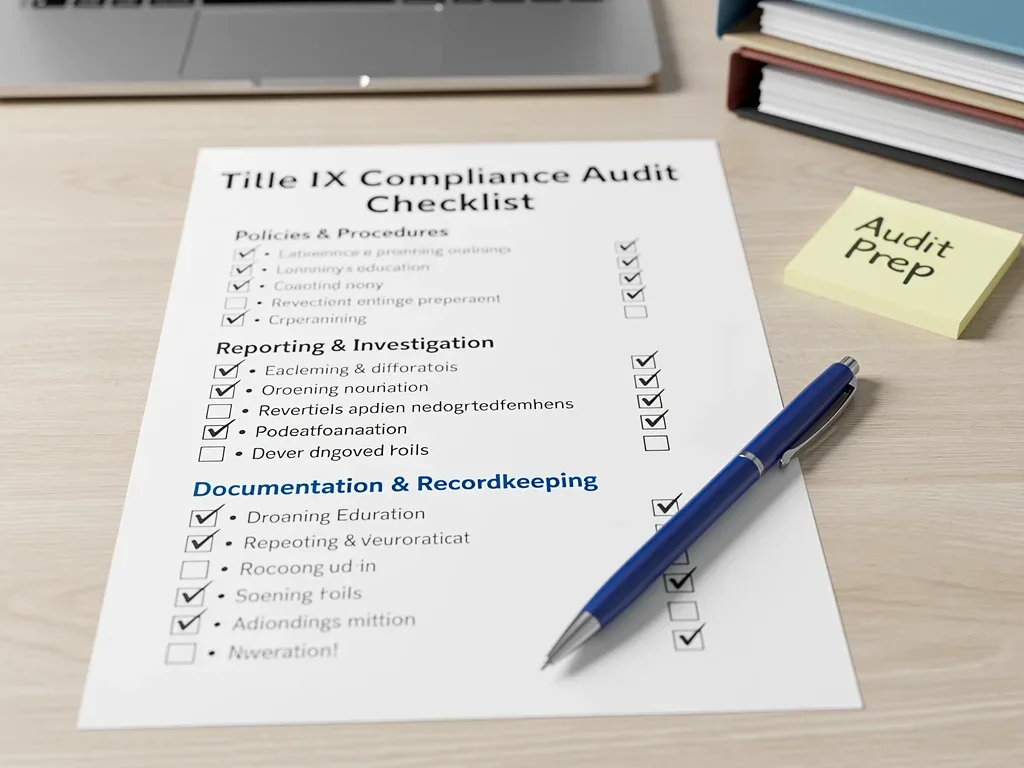
Documentation and Record-Keeping for Title IX Compliance Audits in 2026
Diligent documentation and meticulous record-keeping form the backbone of a successful audit. For the Title IX compliance audits in 2026, administrators must be prepared to present comprehensive records that demonstrate adherence to all federal requirements and institutional policies.
This includes maintaining detailed records of all Title IX reports, investigations, resolutions, and supportive measures provided. The ability to quickly and accurately retrieve this information is crucial for demonstrating transparency and accountability during an audit.
Furthermore, records of training sessions, policy dissemination, and any corrective actions taken in response to identified issues should also be readily available. Organized and complete documentation serves as undeniable evidence of compliance efforts.
Maintaining Comprehensive Incident Records
Every single incident related to sex-based discrimination, from initial report to final resolution, must be thoroughly documented. This includes dates, times, involved parties, descriptions of alleged conduct, and all steps taken by the school in response.
These records should detail the provision of supportive measures, communication with parties, and the rationale behind any decisions made. Consistent and complete record-keeping provides a clear audit trail and demonstrates due diligence.
Archiving Training and Policy Dissemination Records
Beyond incident-specific documentation, administrators must also maintain robust records of all Title IX-related training. This includes sign-in sheets, training agendas, materials distributed, and proof of completion for all staff and students.
Equally important is documenting the dissemination of Title IX policies. This could involve records of website updates, email notifications, student handbook distributions, and any other methods used to inform the school community about their rights and responsibilities under Title IX.
Resource Allocation and Staffing for Title IX Compliance Audits in 2026
Adequate resource allocation and appropriate staffing are foundational to effective Title IX implementation. The Title IX compliance audits in 2026 will assess whether high schools have dedicated sufficient personnel and resources to manage their Title IX responsibilities effectively.
This means evaluating the Title IX Coordinator's workload, ensuring they have the necessary support staff, and that investigators and decision-makers possess the time and expertise required for their roles. Understaffing or insufficient resources can lead to delays, inconsistencies, and ultimately, non-compliance.
Administrators must also ensure that their Title IX team has access to ongoing professional development and legal counsel to stay abreast of evolving regulations and best practices. Investing in these areas is a clear indicator of an institution's commitment to Title IX.
Assessing Title IX Coordinator Support
The Title IX Coordinator is central to an institution's compliance efforts. Administrators must assess whether this individual has adequate time, resources, and institutional support to fulfill their extensive duties. This includes evaluating their access to legal advice, administrative assistance, and professional development opportunities.
An overburdened or unsupported Title IX Coordinator can become a significant liability during an audit. Ensuring they are well-resourced demonstrates a serious commitment to effective Title IX implementation and can streamline the entire compliance process.
Ensuring Sufficient Investigative Capacity
The capacity to conduct prompt, thorough, and impartial investigations is a cornerstone of Title IX compliance. Administrators need to review their investigative resources, ensuring there are enough trained investigators to handle potential caseloads without undue delay.
This also includes ensuring that investigators have access to necessary tools, training, and the authority to gather evidence and interview all relevant parties. A robust investigative capacity is critical for achieving fair and timely resolutions, which will be closely examined during the Title IX compliance audits in 2026.
Proactive Measures and Continuous Improvement Beyond the Audit
While the immediate focus is on preparing for the Title IX compliance audits in 2026, true compliance is an ongoing process of continuous improvement. Administrators should leverage the audit preparation period to establish systems for regular review and enhancement of their Title IX program.
This involves implementing feedback mechanisms, conducting periodic internal assessments, and staying informed about emerging best practices and regulatory changes. A proactive stance ensures that the school remains compliant not just for the audit, but as a permanent commitment to student welfare.
Developing a culture of continuous vigilance and responsiveness is the ultimate goal. This commitment extends beyond mere legal requirements, fostering an environment where every student feels safe, respected, and empowered, knowing their rights are protected.
Implementing Feedback Mechanisms and Internal Reviews
Establishing formal mechanisms for feedback from students, staff, and faculty regarding the Title IX process is invaluable. This could include anonymous surveys, focus groups, or designated feedback channels that allow the school community to voice concerns and suggest improvements.
Regular internal reviews of Title IX policies, procedures, and training effectiveness should also be scheduled. These self-assessments help identify areas for growth before external audits, allowing for timely adjustments and demonstrating a proactive approach to compliance.
Staying Updated on Regulatory Changes and Best Practices
The regulatory landscape for Title IX is dynamic, with interpretations and guidance evolving over time. Administrators must commit to staying continuously informed about any new federal regulations, court decisions, or best practices that impact Title IX compliance.
Subscribing to legal updates, participating in professional development, and networking with other Title IX professionals are crucial for this. Proactive engagement with regulatory changes ensures that the school's policies and practices remain current and effective, anticipating future audit requirements.
Key Audit Area | Brief Description |
|---|---|
Policy Review | Ensure all Title IX policies align with current federal regulations and are clearly communicated. |
Training Programs | Verify comprehensive and role-specific training for staff and awareness for students. |
Documentation | Maintain meticulous records of all incidents, investigations, and training activities. |
Resource Allocation | Ensure adequate staffing and resources for the Title IX Coordinator and investigative team. |
Frequently Asked Questions About Title IX Compliance Audits
What is the primary purpose of Title IX compliance audits in 2026?▼
The primary purpose is to ensure high schools are fully compliant with federal regulations preventing sex-based discrimination. These audits verify that institutions have robust policies, procedures, and training in place to address sexual harassment and assault effectively, safeguarding students' rights and well-being.
Who is responsible for overseeing Title IX compliance within a high school?▼
Every high school must designate a Title IX Coordinator who is responsible for overseeing all aspects of Title IX compliance. This includes developing policies, coordinating training, and ensuring proper investigation and resolution of complaints, acting as the central point of contact.
What are the potential consequences of non-compliance during a Title IX audit?▼
Non-compliance can lead to severe penalties, including the loss of federal funding for the institution. Additionally, schools may face legal challenges, significant financial liabilities, and reputational damage within the community, impacting student enrollment and public trust.
How often should high schools review their Title IX policies and procedures?▼
High schools should review their Title IX policies and procedures at least annually, or whenever new federal guidance or regulations are issued. Regular reviews ensure that policies remain current, effective, and align with the evolving legal landscape, preventing potential compliance gaps.
What resources are available to help administrators prepare for Title IX audits?▼
Administrators can access resources from the U.S. Department of Education, professional organizations like ATIXA, and legal counsel specializing in education law. These resources provide guidance on best practices, training materials, and support for developing and implementing compliant Title IX programs.
Looking Ahead: Sustaining Title IX Compliance
The impending Title IX compliance audits in 2026 serve as a vital checkpoint, but the work of upholding Title IX is continuous. High school administrators must view this audit preparation not as a one-time task, but as an opportunity to embed a culture of vigilance and responsiveness.
The implications extend beyond legal mandates, touching upon the fundamental right of every student to a safe and equitable educational experience. Sustaining robust Title IX compliance requires ongoing commitment, adaptability, and a proactive approach, leveraging comprehensive resources like Franczek's 2026 Title IX compliance tools and training offerings, to navigate evolving challenges and regulatory changes.
By prioritizing these audits now, administrators are not just meeting federal requirements; they are actively shaping a more secure and inclusive future for their school communities. The landscape of educational equity demands constant attention, and preparing for these audits is a critical step in that journey.